The World Cup: A Legacy of Legends
Since its inception, the World Cup has been the pinnacle of football excellence, showcasing the talents of iconic players like Pelé, Maradona, Messi, ... This global event not only unites nations but also celebrates the beautiful game's rich history and its profound impact on cultures worldwide. From unforgettable goals to historic victories, the World Cup continues to inspire generations, leaving an indelible mark on the sport's legacy.

Pelé. The King of Football.
He was born on October 23, 1940, in the Brazilian town of Três Corações, in the state of Minas Gerais.
Pelé is considered by many to be the greatest footballer of the century.
He began playing football the way football is often played in Brazil: in the streets. He played with his schoolmates or his neighbors. However, his professional football career began at age 13 when he joined the youth team of Clube Atlético de Bauru.
His first coach was Valdemar de Brito, a footballer who played for the Brazilian national team in the 1934 World Cup. It was De Brito who brought Pelé to the Santos team in São Paulo; and with Santos came his rise to fame and World Cup victories.
In the 1958 World Cup final, at just 17 years old, Pelé was a true revelation: two spectacular goals from the young footballer gave Brazil a resounding 5-2 victory against Sweden, the host team.
The 1958 World Cup was followed by other World Cups for Pelé: in Chile 1962, a muscle injury prevented him from participating in almost all the matches. However, he still managed to score a memorable goal in the first game against Mexico.
His next World Cup was Mexico 1970. There he showcased the best of his talent. In 1969, Pelé scored his 1,000th goal.
In October 1974, he retired from Santos, only to reappear a year later with the New York Cosmos. Pelé played his last match in New Jersey on October 1, 1977, having scored 1,283 goals.
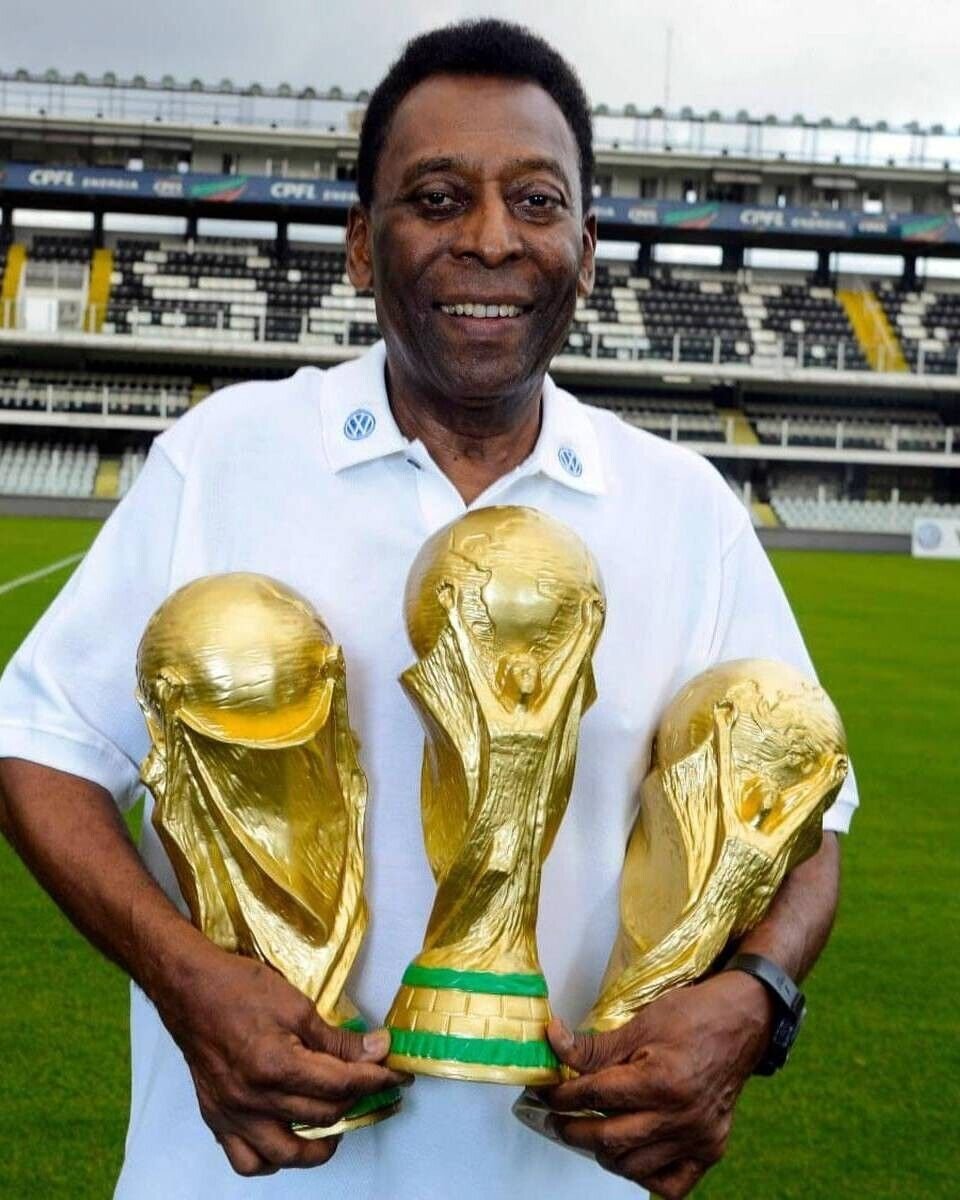
Pelé's World Cup Journey
1958 FIFA World Cup
June 8 - June 29, 1958

Witness Pelé's debut as he dazzled the world with his skill, scoring six goals and leading Brazil to their first World Cup victory.
1962 FIFA World Cup
May 30 - June 17, 1962

Despite an injury, Pelé's early performances helped set the stage for Brazil's successful title defense, cementing their dominance in world football.
1966 FIFA World Cup
July 11 - July 30, 1966

A challenging tournament for Pelé, marked by rough play and injuries, yet his resilience and dedication to the sport shone through.
1970 FIFA World Cup
May 31 - June 21, 1970

Pelé's crowning achievement, where he led Brazil to a third World Cup title with unforgettable performances, solidifying his status as a football legend.
Pelé's World Cup Legacy
Pelé's World Cup journey is a testament to his legendary status in football history.
Goals Galore
Pelé scored 1283 goals in his career, 12 in the World Cups, showcasing his incredible scoring ability.
World Cups won
Participating in 14 World Cup matches in 4 World Cups, Pelé's presence was a game-changer for Brazil.
Maradona: A World Cup Icon
Diego Maradona, a name that resonates with passion and brilliance in the world of football, forever etched his legacy during four FIFA World Cups. His journey began in 1982 at the tournament held in Spain, where he first showcased his extraordinary talent against Belgium. Despite being surrounded by six defenders, Maradona's agility and skill were evident even then. However, it was not until 1986 that he truly captured the world's imagination.
In Mexico '86, Maradona reached his zenith. He led Argentina to victory with an unforgettable performance that included two iconic moments: the infamous 'Hand of God' goal and what many call the 'Goal of the Century.' In a breathtaking display against England, he dribbled past five players before slotting home, a moment immortalized in football history.
The triumph brought him adoration but also pressure; expectations soared as fans believed they had found their savior on the pitch. Yet, this fame came at a cost, Maradona faced intense scrutiny from opponents who often resorted to brutal tactics to stop him. In total across all tournaments, he endured countless fouls yet remained undeterred.
His second World Cup appearance in Italy (1990) saw Argentina reach another final but fall short against West Germany, a heart-wrenching defeat for both player and nation alike. By 1994 in America, age had begun to catch up with him; however, his love for football never waned. A poignant moment came when he scored one last goal for Argentina against Greece before facing suspension due to doping allegations.
Throughout these tournaments, from youthful exuberance to seasoned veteran, Maradona’s artistry on the ball captivated millions around the globe. He transformed matches into performances filled with drama and emotion while reminding us all why we fell in love with this beautiful game.
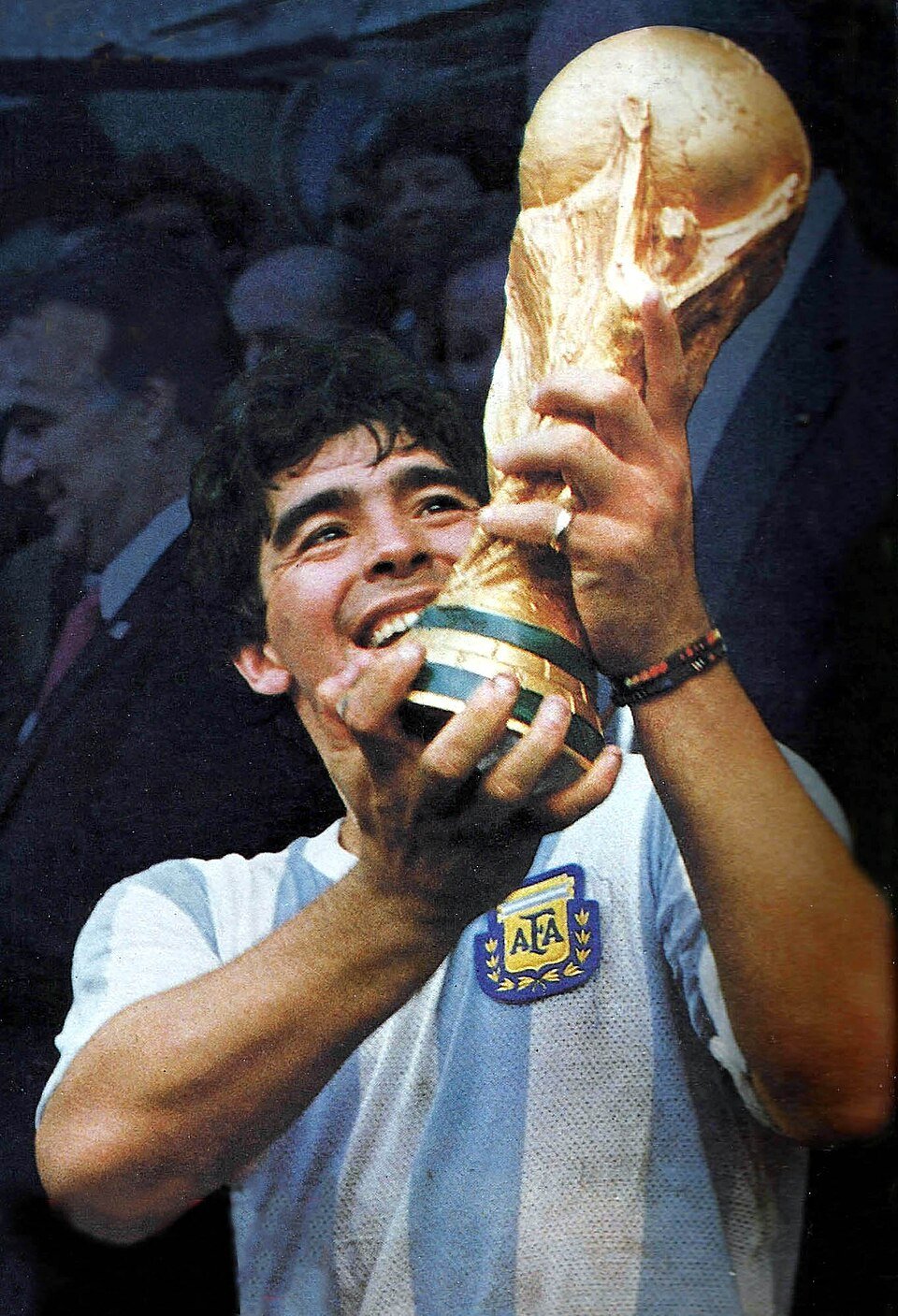
Maradona's World Cup Journey
1982 FIFA World Cup

Maradona made his World Cup debut in Spain, showcasing his potential as a future football legend despite Argentina's early exit.
1986 FIFA World Cup
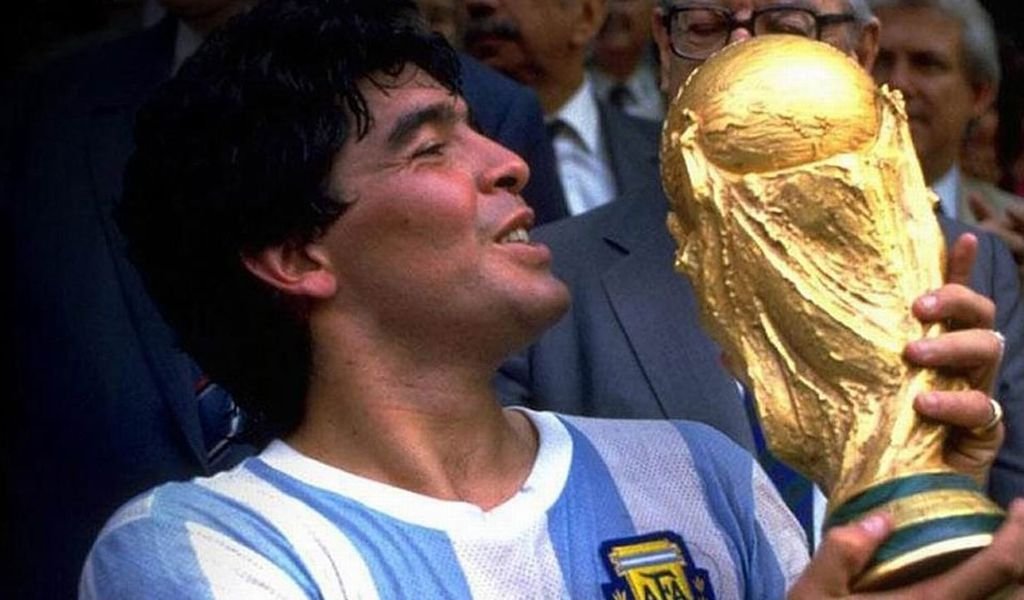
Maradona led Argentina to World Cup glory, delivering iconic performances that included the 'Hand of God' and the 'Goal of the Century.'
1990 FIFA World Cup

Despite battling injuries, Maradona guided Argentina to the final, where they narrowly lost to West Germany.
1994 FIFA World Cup
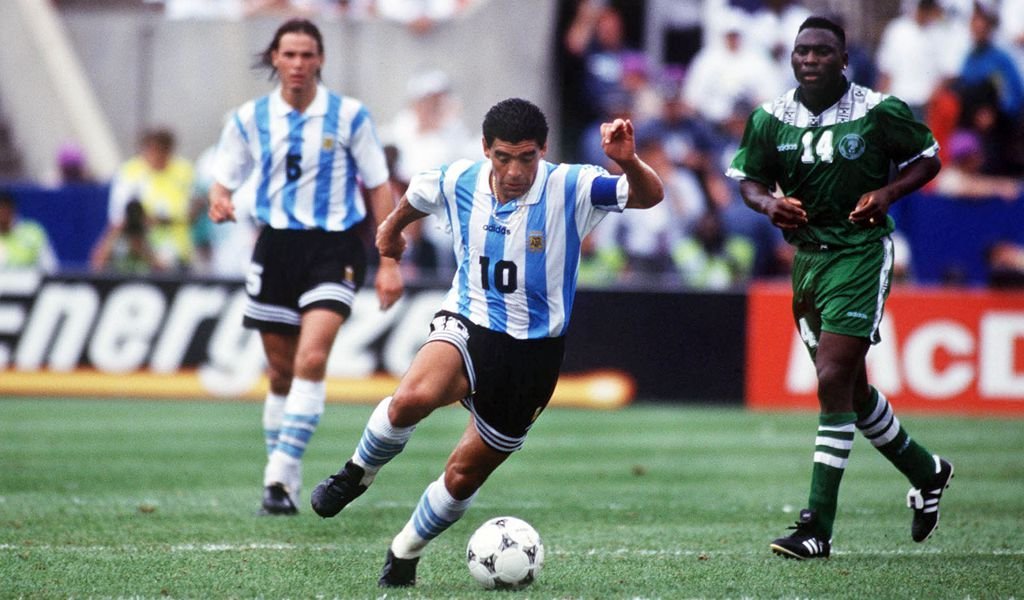
Maradona's World Cup journey concluded in the USA, where he played his last international matches amid controversy.
Voices on Maradona's Legacy
"Maradona's genius on the field was unparalleled. His performance in the 1986 World Cup is etched in history as a testament to his extraordinary talent."
John Smith
Football Historian
"Watching Maradona play was like witnessing magic. His ability to change the course of a game with a single move was simply breathtaking."
Emily Johnson
Sports Journalist
"Maradona's impact on football transcends generations. His passion and skill inspired countless fans and players around the world."
Carlos Mendoza
Former Professional Footballer
Maradona's Legacy
Goals Galore
Maradona scored 346 goals in his career, 8 in the 21 matches in the 4 World Cups played.
World Cup won
Participating in 21 World Cup matches in 4 World Cups,
Franz Beckenbauer: Der Kaiser
Franz Beckenbauer (born September 11, 1945, Munich, Germany—died January 7, 2024, Salzburg, Austria) was a German football player who was one of only three people to win the World Cup as a player and as a coach (1974 and 1990, respectively). Nicknamed “der Kaiser,” Beckenbauer dominated German football in the 1960s and ’70s and is arguably the country’s greatest footballer. An intelligent and graceful player, he invented the modern position of the attacking sweeper who initiates the offense from central defense with deft passes and long runs.
Beckenbauer joined the Bayern Munich team in 1958 and made his first-team debut in 1963. As captain from 1971, he helped Bayern win three European Champions Clubs’ Cups (1973–74, 1974–75, and 1975–76) and four national titles. In 1971 he was appointed captain of West Germany’s national team, leading it to the 1972 European Championship and the 1974 World Cup championship. He was named European Footballer of the Year in 1972 and 1976. Beckenbauer then played with the New York Cosmos (1977–80, 1983–84) and Hamburg (1980–82) before retiring from play in 1984. He played 103 times for his country.
In 1984 Beckenbauer was appointed manager of the West German team, which was the World Cup runner-up in 1986 and the winner in 1990. Thereafter he managed Olympique de Marseille (1990–91) and Bayern Munich (1993–94, 1996), and he became club vice president of the German Football Federation in 1998. He oversaw his home country’s successful bid to host the 2006 World Cup and later served in executive capacities for Bayern and for the Fédération Internationale de Football Association (FIFA), football’s international governing body.
“Football is the ballet of the masses.”

Franz Beckenbauer's World Cup Journey
1966 FIFA World Cup - England
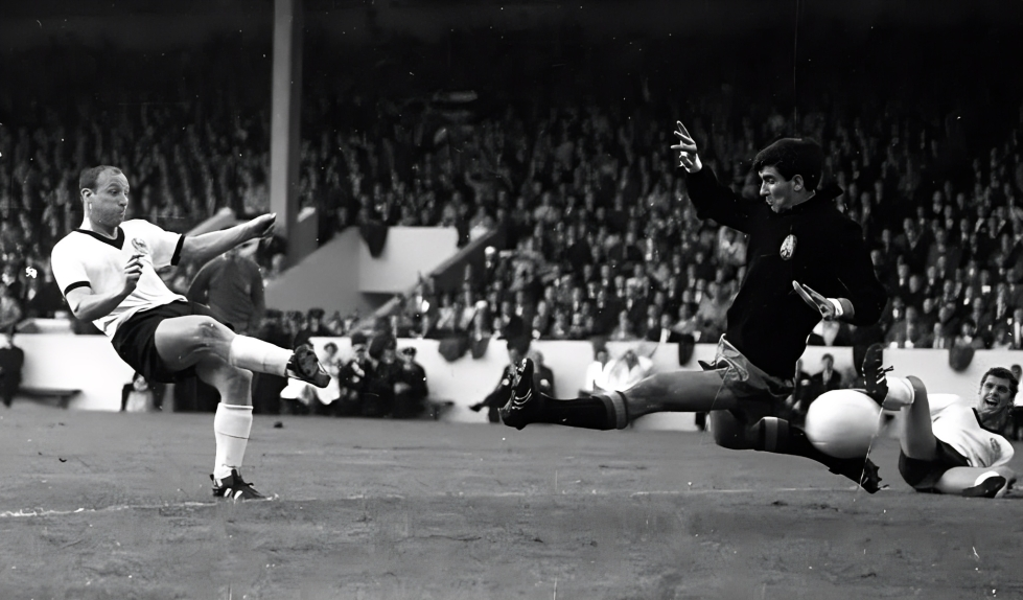
West Germany reached the finals, with Beckenbauer making a significant impact as a young midfielder.
1970 FIFA World Cup - Mexico

Beckenbauer's resilience shone through as he played with a dislocated shoulder, leading West Germany to a third-place finish.
1974 FIFA World Cup - Germany
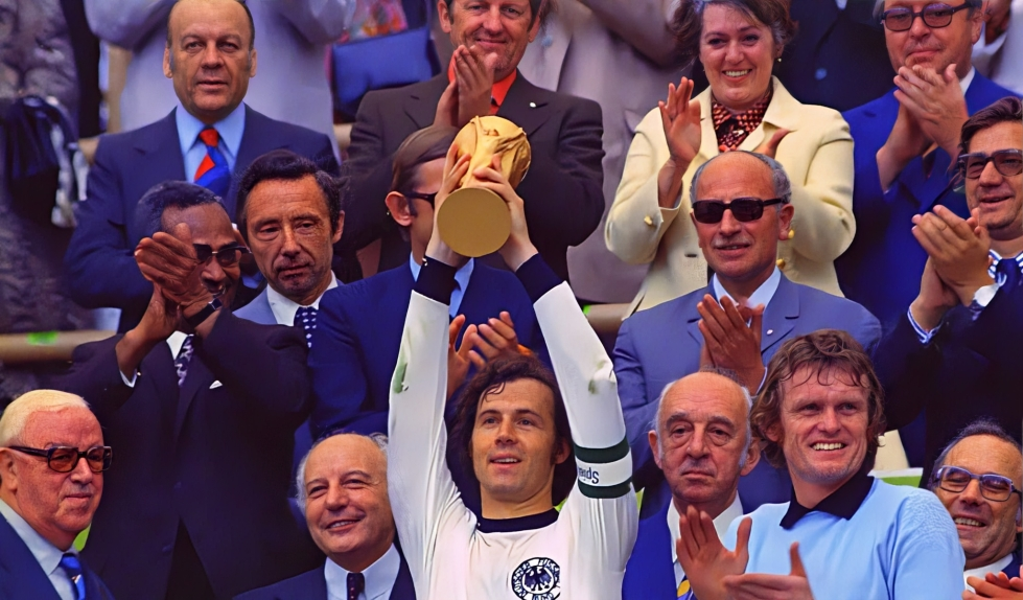
As captain, Beckenbauer guided West Germany to victory, lifting the trophy on home soil.
1990 FIFA World Cup - Italy
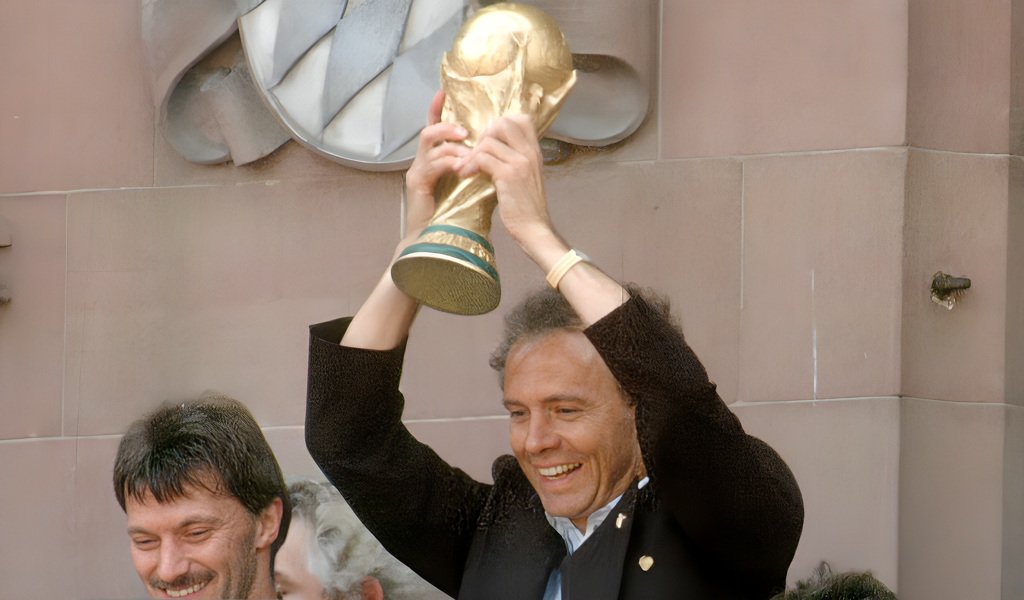
Beckenbauer became the first to win the World Cup as both a player and a coach, leading West Germany to triumph.
Franz Beckenbauer's Prestigious Honors
1974
FIFA World Cup Winner
As captain, Franz Beckenbauer led West Germany to victory in the 1974 FIFA World Cup, showcasing his exceptional leadership and strategic prowess on the field.
1990
FIFA World Cup Winning Coach
Beckenbauer became the first person to win the FIFA World Cup both as a player and a coach, guiding Germany to triumph in the 1990 tournament.
1999
FIFA World Player of the Century
In recognition of his outstanding contributions to football, Beckenbauer was named FIFA World Player of the Century, cementing his legacy in the sport.
What Experts Say About Franz Beckenbauer
"Franz Beckenbauer revolutionized the role of the sweeper, bringing elegance and intelligence to the game like no other."
Johan Cruyff
Legendary Dutch Footballer
"His vision and understanding of football are unparalleled, making him one of the greatest minds in the sport's history."
Sir Alex Ferguson
Renowned Football Manager
"Beckenbauer's influence extends beyond the pitch; he has shaped the modern game with his innovative approach."
Gary Lineker
Former England Captain and Sports Broadcaster
Beckenbauer's Legacy
Goals Galore
Beckenbauer scored 346 goals in his career, 5 in the 18 matches in the 3 World Cups played.
World Cup won
Participating in 18 World Cup matches in 3 World Cups as player and 1 more as coach,
Zinedine Zidane
Zinedine Zidane, born on June 23, 1972, in Marseille, France, is a retired professional footballer and one of the sport's most revered figures. Zidane's journey began in the streets of La Castellane, where his talent quickly became evident. He rose through the ranks, joining AS Cannes at the age of 14 and making his professional debut at 17. Zidane's career reached new heights with his move to Juventus in 1996, where he won two Serie A titles.
His transfer to Real Madrid in 2001 for a then-record fee marked a new chapter, culminating in a UEFA Champions League victory in 2002. Zidane's elegance on the field, vision, and technical prowess earned him numerous accolades, including three FIFA World Player of the Year awards. Beyond his club success, Zidane's impact on the French national team is legendary, leading them to victory in the 1998 FIFA World Cup and the UEFA Euro 2000. His contributions to football extend beyond his playing days, as he transitioned into a successful managerial career, guiding Real Madrid to multiple Champions League titles.
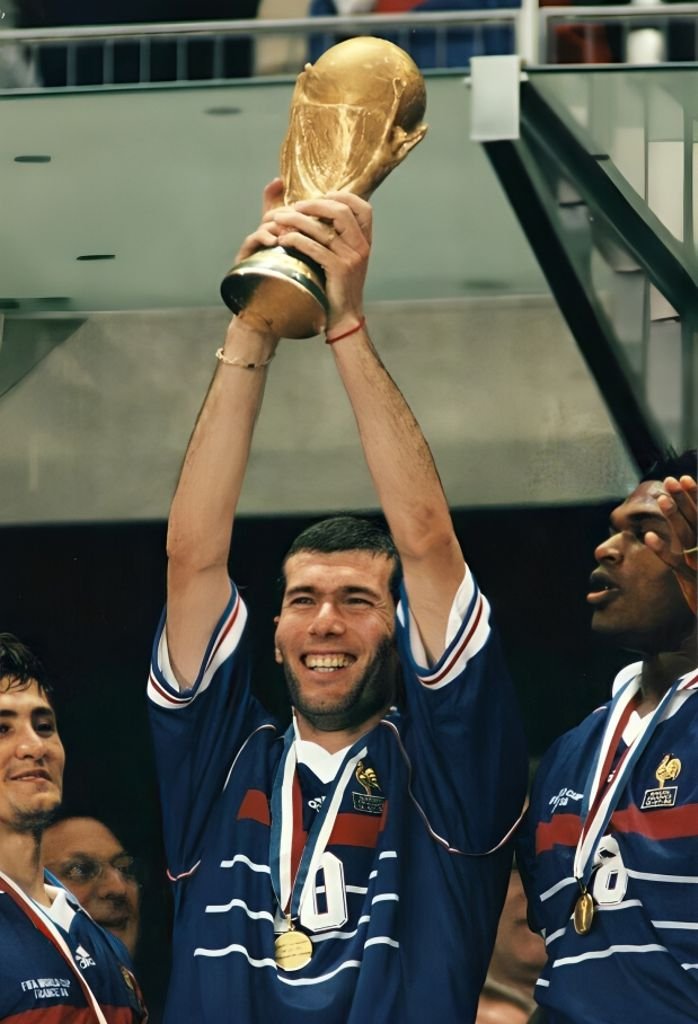
Zinedine Zidane's World Cup journey began in 1998 when he played a pivotal role in leading France to their first-ever World Cup victory. His two goals in the final against Brazil secured his place in football history. Zidane's performance throughout the tournament was instrumental, showcasing his exceptional skill and leadership.
In the 2002 World Cup, Zidane faced challenges due to injury, which limited his impact on the tournament. Despite France's early exit, his presence was sorely missed, highlighting his importance to the team.
The 2006 World Cup marked Zidane's swan song, where he delivered a series of masterful performances, guiding France to the final. His iconic headbutt in the final against Italy, however, overshadowed his otherwise stellar tournament. Despite the controversy, Zidane was awarded the Golden Ball as the tournament's best player, cementing his legacy as one of the greatest to ever grace the World Cup stage.
Zidane's Prestigious Honors
1998
FIFA World Cup Champion
Zidane led France to victory in the 1998 FIFA World Cup, scoring twice in the final and earning the tournament's top honors.
2000
UEFA European Championship Winner
Zidane played a pivotal role in France's triumph at the UEFA Euro 2000, showcasing his exceptional skill and leadership.
2003
FIFA World Player of the Year
Recognized for his outstanding performance and influence on the field, Zidane was awarded the FIFA World Player of the Year in 2003.
Zidane's World Cup Highlights
1998 World Cup Final
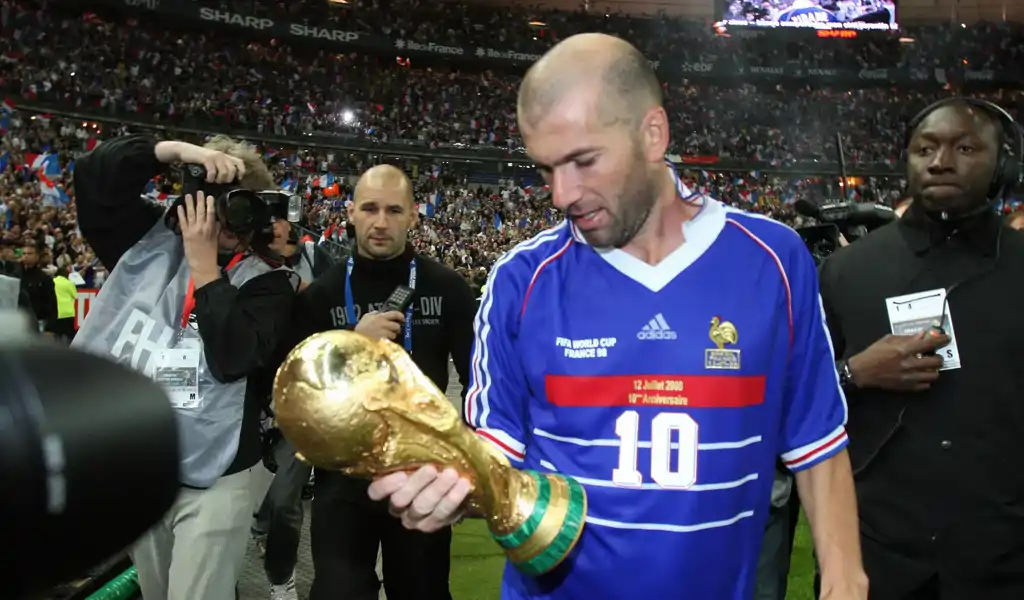
Zinedine Zidane was the hero for host nation France, scoring two headed goals from corners against Brazil in a dominant 3-0 victory
2002 World Cup Group Stage
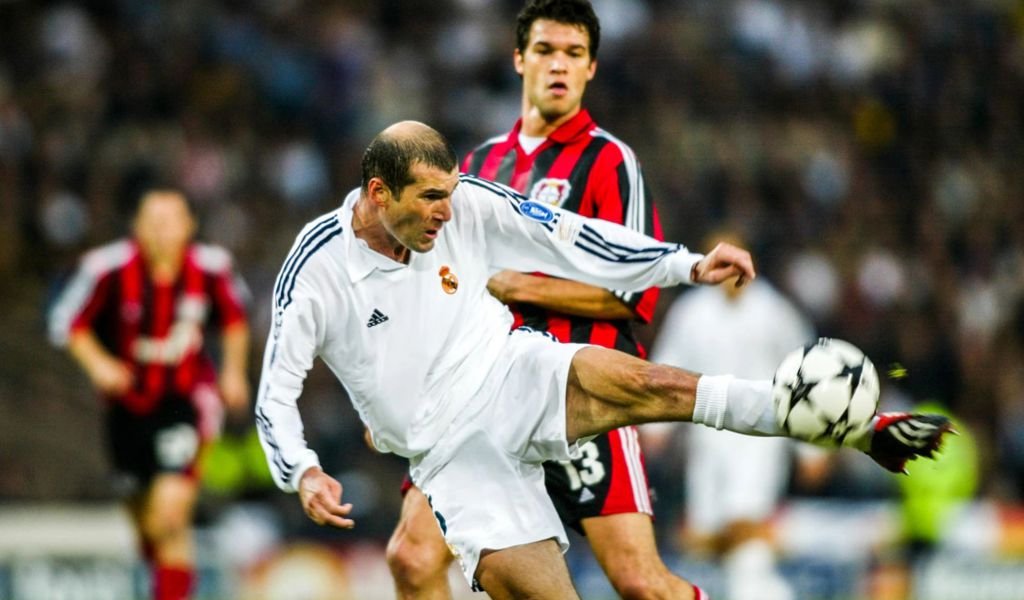
Zidane suffered a tear to his left quadriceps muscle in a warm-up friendly against South Korea
2006 World Cup Semifinal
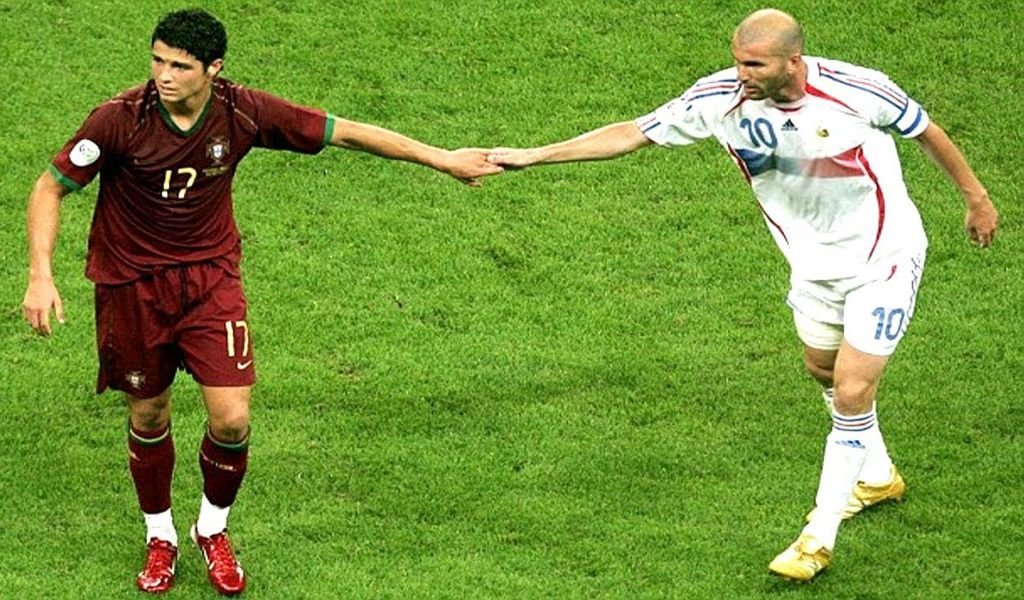
He scored a penalty in the semi-final against Portugal to secure passage to the final
2006 World Cup Final
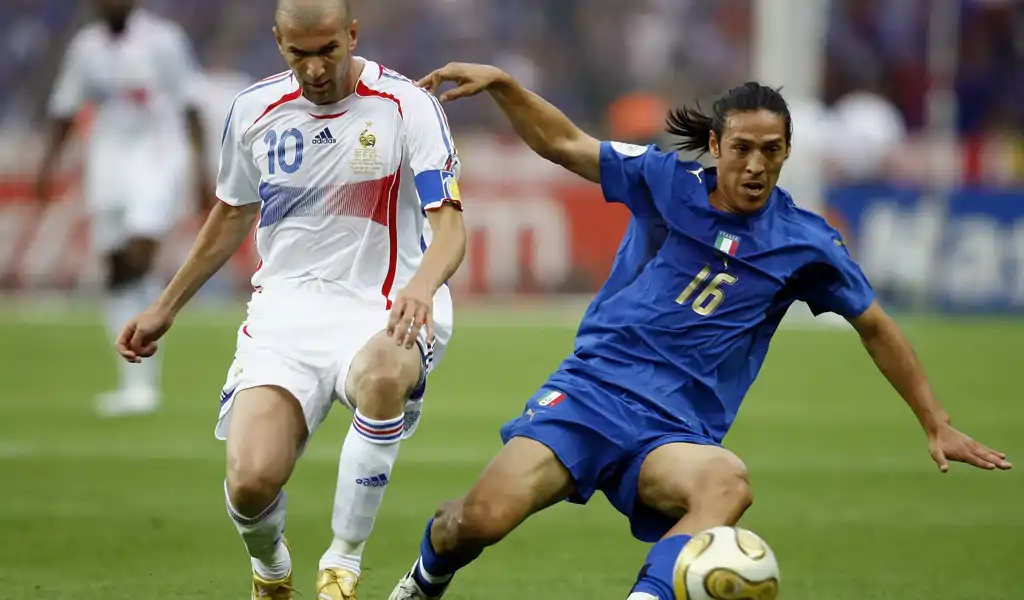
Zinedine Zidane's 2006 World Cup Final was famous for his brilliant opening goal (a Panenka penalty).
Zidane's Legacy
Goals Galore
Zidane scored 165 goals in his career, 5 in 3 World Cups.
World Cup won
Participating in 12 World Cup matches in 3 World Cups,
Lionel Messi
(Lionel Andrés Messi; Rosario, Santa Fe, 1987) Argentine footballer. Possessing exceptional technical skill, blistering speed, and boundless creativity, since arriving at FC Barcelona at the age of 13 with his parents, he has had a meteoric rise through the youth ranks to the first team.
Messi debuted for FC Barcelona's first team in December 2003, in a friendly match against FC Porto, then managed by José Mourinho. His official debut came the following year, in the 2004/2005 season, in a league match against RCD Espanyol, becoming the youngest Barcelona player to ever play in a La Liga match (16 years old).
The club won La Liga in 2004/05 and, the following year, the 2005/06 UEFA Champions League. In the 2006/07 season, Leo Messi became a regular starter, scored a hat-trick in El Clásico against their arch-rivals, Real Madrid, and finished the season with 14 goals in 26 appearances. In the 2008/09 season, he established himself as the best player in the world, and Barcelona won the treble. Messi scored a total of 38 goals. In 2009/10, he scored 47 goals in the season, 34 of which were in league competition. He won the Golden Boot, equaling Ronaldo's goalscoring record from the 1996/97 season.
PSG (Paris Saint-Germain Football Club) announced that the press conference to present Messi as a new player for the team would be held on August 11, 2021, at 11:00 AM in the auditorium at the Parc des Princes.
In the Argentine national team, Leo Messi wore the captain's armband in numerous matches. In 2006, he became the youngest player to ever participate in a FIFA World Cup, and with Argentina, he won the runner-up position in the 2007 Copa América. In 2008, at the Beijing Olympics, Messi won a gold medal.
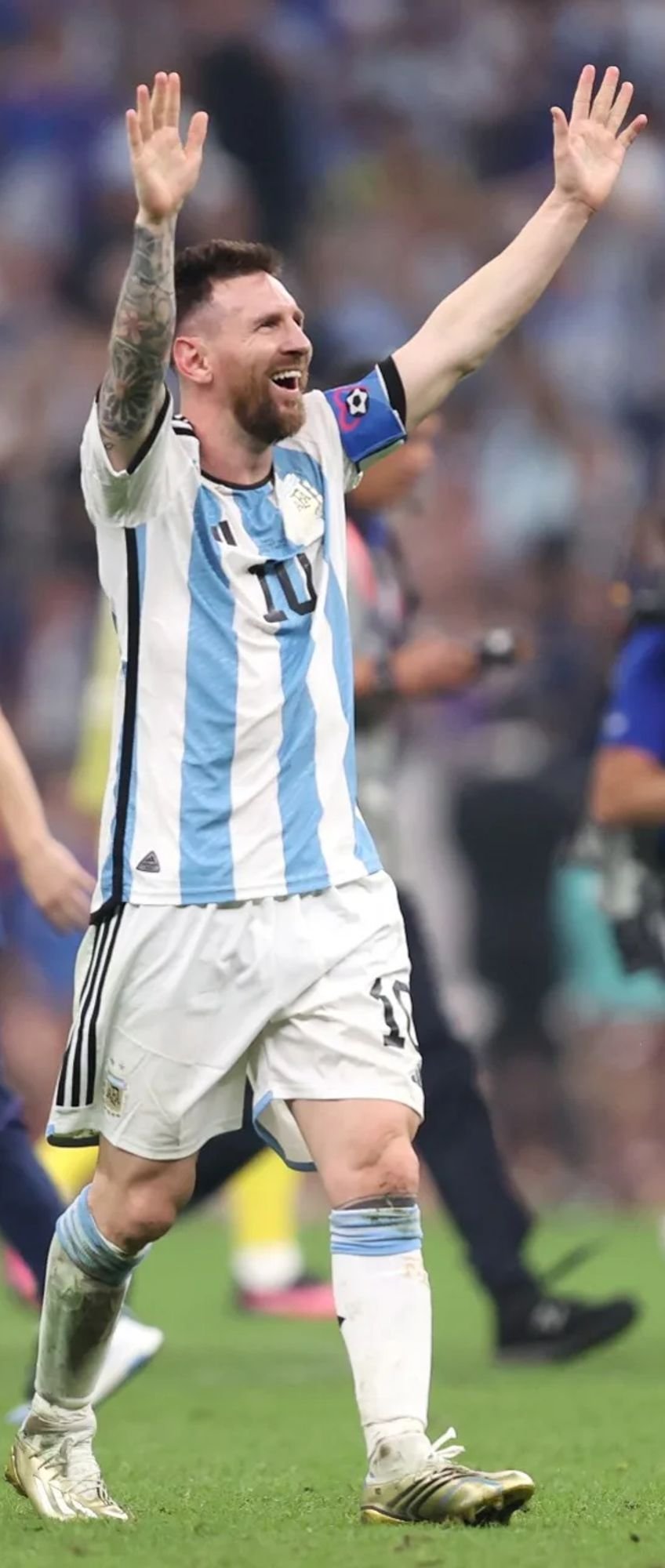
On July 13, 2014, he and his national team faced Germany in the FIFA World Cup final in Brazil, losing to a goal scored by Mario Götze in the 114th minute. Messi was chosen by FIFA to receive the Golden Ball award for "Best Player of the Tournament." On July 10, 2021, Argentina won the Copa América, defeating Brazil 1-0 in Rio de Janeiro, with Messi securing his first title with the senior national team. He was also named the tournament's best player and top scorer, with four goals. On December 18, 2022, Lionel Messi, with the Argentine national team, won the Qatar 2022 World Cup final against Kylian Mbappé's France, scoring two goals and breaking two records on a glorious day for the Argentine captain. The number 10 became the player with the most appearances and minutes played in a single World Cup in history, surpassing Germany's Lothar Matthäus.
The Argentine captain received the Golden Ball as the best player of the Qatar World Cup after being crowned champion that Sunday with a penalty shootout victory over France (4-2) at Lusail Stadium. In his final World Cup match, Messi (35 years old) received this distinction for the second time in his career.
The Argentine, who scored seven goals at Qatar 2022, finished as the competition's second-highest scorer, behind Kylian Mbappé (8), who received the Golden Boot.
On July 14, 2024, Argentina was crowned champion of the Americas. Lionel Scaloni's team defeated Colombia 1-0 with a goal by Lautaro Martínez in the 112th minute, securing their sixteenth Copa América title and extending a successful run that includes a historic treble (Copa América-World Cup-Copa América).
Messi is considered one of the most talented and skillful footballers in history. His style is recognized for his goal-scoring ability and his assists to his teammates.
He stands out for his ability to control and maneuver the ball with ease against multiple defenders simultaneously, for creating scoring opportunities for himself and his teammates, and for his excellent vision and ability to anticipate player movements on the field. Another of his qualities is his technique and shooting accuracy.
Messi's World Cup Legacy

Since his debut in the 2006 FIFA World Cup, Lionel Messi has been a central figure for Argentina. In 2006, he became the youngest Argentine to score in a World Cup, showcasing his potential on the global stage. The 2010 World Cup saw Messi as the team's captain, where his leadership and vision were evident, although Argentina fell short in the quarter-finals. The 2014 tournament in Brazil was a standout, as Messi led Argentina to the finals, earning the Golden Ball for his outstanding performance. In 2018, despite a challenging campaign, Messi's determination never wavered. Each World Cup has been a testament to his enduring talent and commitment to his national team.
As the world anticipates the 2022 FIFA World Cup, all eyes are on Messi to see if he can finally lift the coveted trophy. His journey through these tournaments not only highlights his personal achievements but also underscores his impact on the sport, inspiring future generations of footballers worldwide.
Messi's World Cup Highlights
2006 FIFA World Cup

Messi's World Cup debut in Germany saw him score his first goal against Serbia and Montenegro, becoming the youngest Argentine to score in a World Cup. His performance hinted at the greatness to come.
2010 FIFA World Cup
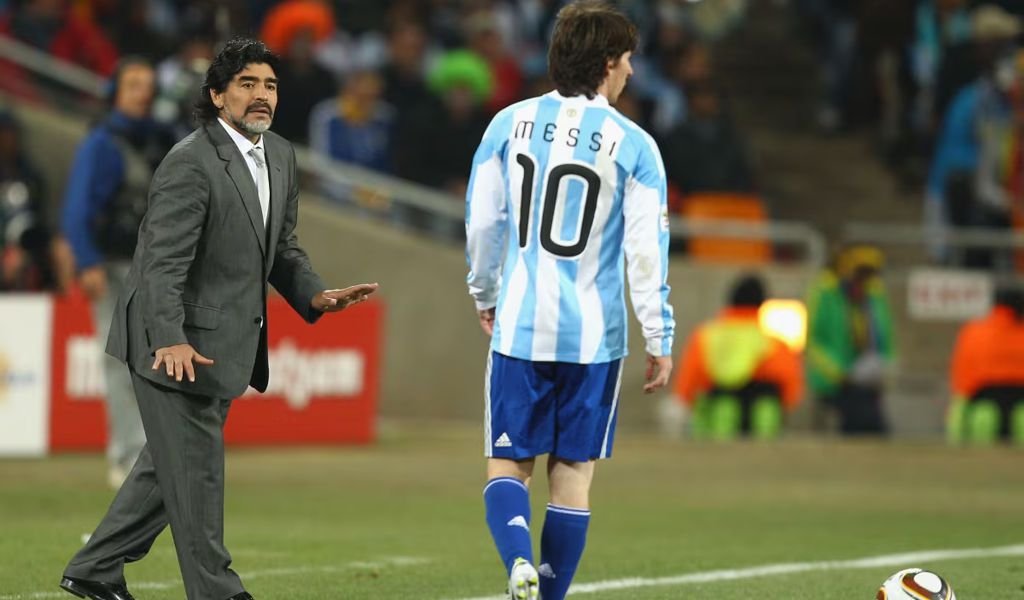
In South Africa, Messi showcased his playmaking abilities, leading Argentina to the quarter-finals. Despite not scoring, his influence on the field was undeniable, earning him praise for his creativity and vision.
2014 FIFA World Cup
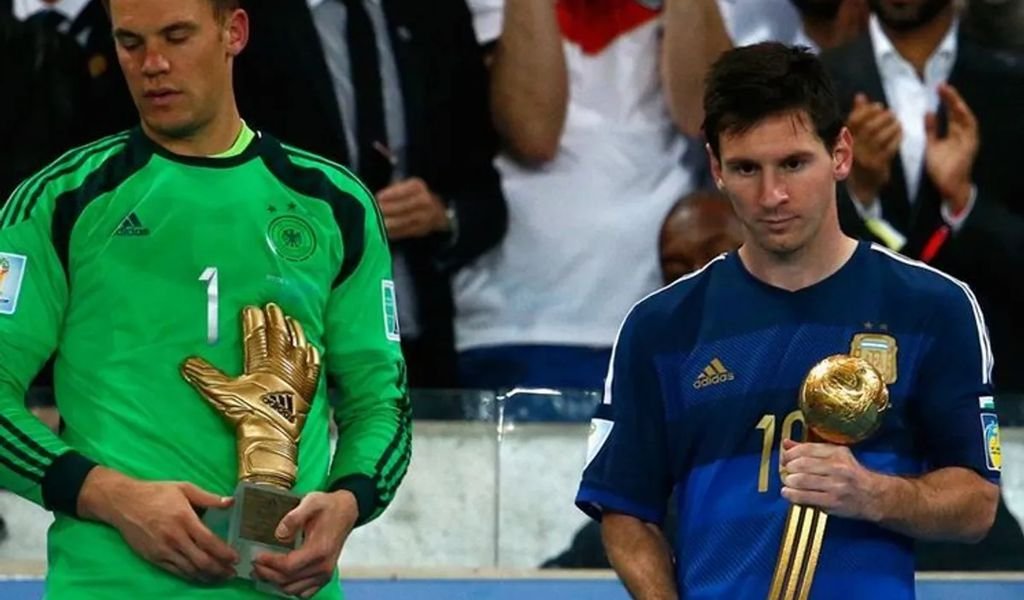
Messi captained Argentina to the finals in Brazil, delivering crucial goals and assists. His performances earned him the Golden Ball award, although Argentina fell short in the final against Germany.
2018 FIFA World Cup
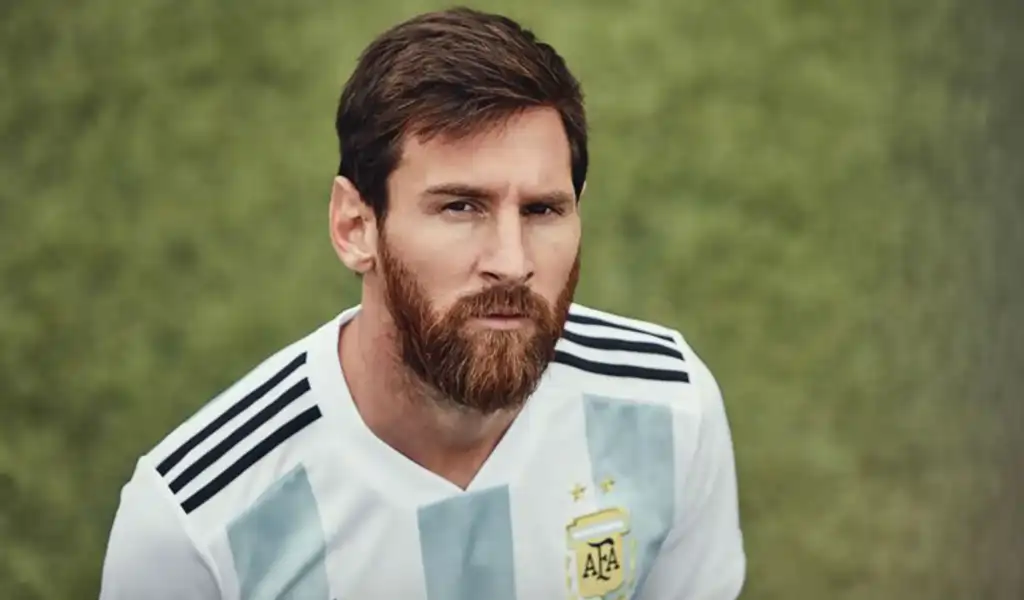
In Russia, Messi's leadership was pivotal as Argentina advanced to the knockout stages. His memorable goal against Nigeria ensured their progression, highlighting his enduring brilliance.
Messi's World Cup Honors
2022
FIFA World Cup Winner
In 2022, Messi led Argentina to victory in the FIFA World Cup, securing his place among the greatest in football history.
2014
Golden Ball Award
Awarded the Golden Ball for his outstanding performance throughout the tournament, guiding Argentina to the finals.
2022
Silver Boot
Recognized as the second-highest goal scorer in the 2022 World Cup, showcasing his incredible skill and consistency.
Messi's Legacy
Goals Galore
Messi scored 165 goals in his career, 13 in 5 World Cups.
World Cup won
Participating in 26 World Cup matches in 5 World Cups,
